
Blog
Adrenal Fatigue: Myth or Real Medical Condition? What the Science Actually Says


Adrenal Fatigue: Myth or Real Medical Condition? What the Science Actually Says
Is "Adrenal Fatigue" a Real Diagnosis — Or the Wrong Answer to a Real Problem?
- The term was coined in 1998 by a chiropractor and naturopath, not an endocrinologist, and it has never been validated by a peer-reviewed diagnostic test or accepted into mainstream endocrinology.
- There is a real, well-established condition with a similar name — adrenal insufficiency — that genuinely can be life-threatening if missed. This article draws a sharp line between the two so a real emergency never gets mistaken for a wellness-industry label.
- The symptoms attributed to "adrenal fatigue" — exhaustion, poor sleep, sugar cravings, difficulty coping with stress — are real and worth investigating. The problem is that these same symptoms fit dozens of other conditions, and the "adrenal fatigue" label tends to stop the search for the actual cause rather than continue it.
- Section 4 gives you the exact table doctors use to tell the myth apart from the genuine condition, and Section 9 walks through the steps that actually lead to an answer.

- Why "Adrenal Fatigue" Became Such a Popular Explanation
- What the "Adrenal Fatigue" Theory Actually Claims
- What the Evidence Actually Shows
- Adrenal Fatigue vs. Real Adrenal Insufficiency
- Why the Symptoms Feel So Convincing Anyway
- Conditions Commonly Mistaken for "Adrenal Fatigue"
- Why the Tests and Supplements Sold for It Can Be Risky
- Real-World Scenarios: Does Your Pattern Match?
- What to Do Instead — Getting an Actual Diagnosis
- What Genuinely Helps Chronic Stress-Related Exhaustion
- When to Seek Care Immediately
- Decision Guide — Your Situation, Your Next Step
- Frequently Asked Questions
- Summary and Next Steps
1. Why "Adrenal Fatigue" Became Such a Popular Explanation
If you've spent any time searching for reasons you're exhausted, "adrenal fatigue" has probably come up. It's an appealing explanation for a genuinely miserable experience — you're tired in a way that sleep doesn't fix, you crave salt or sugar, you feel like you're running on stimulants just to get through the afternoon, and someone, somewhere, has a name for exactly that: your adrenal glands are "burned out" from too much stress, and if you just support them with the right supplements, you'll get your energy back.
The appeal isn't hard to understand. A specific name feels more actionable than "we're not sure," and a supplement regimen feels more within your control than months of testing that might come back inconclusive. Wellness books, some functional-medicine practitioners, and no shortage of online quizzes have built an entire framework — complete with symptom checklists and salivary cortisol test kits — around the idea that chronic stress wears the adrenal glands down until they can no longer keep up.
The trouble is that this framework was built outside mainstream endocrinology, and when researchers went looking for evidence that it holds up, they didn't find any. That doesn't make your exhaustion less real. It means the explanation you've been offered is very likely the wrong one — and accepting the wrong explanation can genuinely delay finding the right one, which is precisely why this article exists.
There's also a structural reason the theory has stayed popular even after being repeatedly examined and rejected by researchers: it sits at the intersection of a real gap in conventional care and a well-organized commercial industry. People with genuine, persistent fatigue often leave a first doctor's visit with normal-looking bloodwork and no clear next step, which is a frustrating and isolating place to be. Into that gap steps a framework that offers a name, a test, and a product, all packaged together — and because the symptom list is so broad, it's easy for almost anyone who's tired to feel like it was written specifically for them. Recognizing that pattern doesn't make the frustration any less valid; it just helps explain why a scientifically unsupported idea can feel more convincing than it should.
2. What the "Adrenal Fatigue" Theory Actually Claims
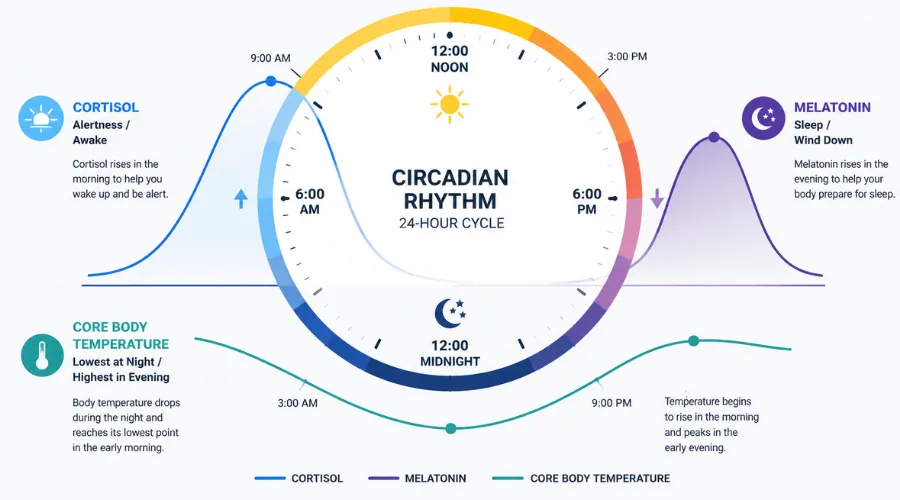
To understand why the theory doesn't hold up, it helps to know exactly what it claims. Your adrenal glands, two small organs that sit above each kidney, produce cortisol in response to signals from the hypothalamus and pituitary gland in your brain — a system called the hypothalamic-pituitary-adrenal, or HPA, axis. Under normal conditions this system ramps cortisol up during stress and brings it back down during recovery.
The "adrenal fatigue" theory, first popularized in a 2001 book by a chiropractor and naturopath named James Wilson, proposes that prolonged, severe stress eventually exhausts the adrenal glands' capacity to keep producing cortisol, causing output to drop below what the body needs. According to this idea, that drop-off is what produces the tiredness, salt cravings, and stress-intolerance associated with the label, and it's said to be detectable through an at-home saliva test that measures cortisol at several points across the day.
It's a coherent-sounding story, and that coherence is part of why it spread so widely. But a story sounding plausible is not the same as a story being supported by evidence — and when the mechanism itself was put to the test, it didn't hold together the way the theory predicts.
Endocrinologists who've studied the actual physiology point out that chronic stress typically doesn't cause the adrenal glands to run low on cortisol at all — if anything, sustained stress tends to keep cortisol output elevated or dysregulated rather than depleted, which is close to the opposite of what the "adrenal fatigue" theory predicts.
3. What the Evidence Actually Shows
This isn't a case where the science is simply undecided. It's been directly and repeatedly examined, and the conclusion has been consistent for years.
The Endocrine Society's Position
The Endocrine Society, the world's largest professional organization of hormone specialists, maintains a public patient-education page stating plainly that no scientific proof exists to support adrenal fatigue as a true medical condition, and that the society is concerned the label can prevent people from getting their real symptoms properly diagnosed and treated. The same source notes that treatments marketed for the condition aren't approved by the FDA and are unlikely to be covered by insurance, since there's no recognized diagnosis to bill for in the first place.
The Systematic Review
In 2016, endocrinologists at a Brazilian medical university conducted a systematic review of every study that had ever examined the claimed link between chronic stress and reduced adrenal output. After screening the available research databases, the review's authors concluded outright that there is no substantiation that adrenal fatigue is an actual medical condition, and that it remains a myth rather than a validated diagnosis. The title of the published paper is, fittingly, blunt: "Adrenal fatigue does not exist."
Mayo Clinic's Guidance
Mayo Clinic's patient-facing guidance is equally direct, stating that adrenal fatigue isn't an official medical diagnosis, but rather a general term used to describe a collection of nonspecific symptoms such as tiredness, weakness, and cravings for sugar and salt — symptoms that, taken alone, can't reliably point to any single cause.
Every major body that has formally examined the "adrenal fatigue" claim — the Endocrine Society, a peer-reviewed systematic review, and leading academic medical centers — has reached the same conclusion: there's no validated test, no accepted diagnostic criteria, and no research base connecting chronic stress to adrenal "burnout" the way the theory describes. This is a rare case of genuine scientific agreement rather than an unsettled debate.
It's worth being precise about what "no evidence" actually means here, since the phrase gets used loosely. It doesn't mean researchers haven't looked, and it doesn't mean the studies came back mixed or inconclusive. The 2016 systematic review specifically searched the major medical research databases for any study that could substantiate the theory, screened what came back against basic quality standards, and found the existing research too methodologically weak, inconsistent, or simply absent to support the claim at any level. That's a meaningfully stronger finding than "unproven" — it's closer to "examined directly, and the theory did not hold up."
4. Adrenal Fatigue vs. Real Adrenal Insufficiency
Here's where precision matters most, because a real, medically recognized condition shares part of the name and a few surface symptoms — and confusing the two has real consequences. Adrenal insufficiency, most commonly known in its primary form as Addison's disease, is a genuine, diagnosable disorder in which the adrenal glands truly do fail to produce enough cortisol and, often, aldosterone.
Diagnosed by symptom checklist or an unvalidated at-home saliva test; no recognized blood marker; theorized to result from everyday chronic stress; not accepted by any endocrinology society.
Diagnosed with standardized blood tests — morning cortisol and ACTH, often confirmed with an ACTH stimulation test; caused by autoimmune destruction of the adrenal glands, certain medications, or pituitary disease.
The National Institute of Diabetes and Digestive and Kidney Diseases explains that adrenal insufficiency occurs when the adrenal glands don't make enough cortisol, and that doctors diagnose it with blood tests rather than symptom questionnaires — a meaningful difference from the "adrenal fatigue" framework, which relies on self-reported symptoms and unvalidated saliva panels.
Cleveland Clinic's overview of Addison's disease notes that it's a rare condition, most common in people between 30 and 50, distinct from the far more common and vague symptom cluster people associate with "adrenal fatigue". Real adrenal insufficiency also comes with signs that "adrenal fatigue" doesn't reliably produce, including unexplained weight loss, low blood pressure that worsens on standing, and, distinctively, darkening of the skin in creases, scars, and gum tissue.
Untreated adrenal insufficiency can progress to an adrenal crisis — a medical emergency involving dangerously low blood pressure, severe vomiting, and loss of consciousness. Cleveland Clinic notes that up to 25% of people who experience an adrenal crisis die from it without prompt treatment. If you have symptoms that could plausibly be real adrenal insufficiency — described in full in Section 11 — this is not something to address with supplements or a wellness protocol. It requires a doctor and standardized blood testing, without delay.
5. Why the Symptoms Feel So Convincing Anyway
If "adrenal fatigue" isn't real, why do so many people feel like the description fits them exactly? The honest answer is that the symptom list was built to be broad, and broad symptom lists fit almost everyone who's exhausted, regardless of the actual cause.
Fatigue, trouble falling asleep or waking up, craving salt or sugar, feeling wired but tired, and needing caffeine to function are among the most common complaints in general medicine. They show up in depression, in anemia, in thyroid disorders, in poor sleep quality, in burnout, in perimenopause, and in dozens of other identifiable conditions — which is exactly the concern the Endocrine Society raises: these symptoms are common and nonspecific enough that they can be found in many diseases, or can simply occur as part of an unusually demanding stretch of life.
There's also a psychological piece worth naming honestly. A symptom checklist that says "yes, this is a real thing, and it has a name" can feel like relief after months of feeling dismissed or unheard by the healthcare system. That relief is genuine and understandable. It just isn't evidence that the label is medically accurate — and Section 6 walks through what's actually more likely to be driving the exhaustion in most cases.
It's worth adding that fatigue itself is one of the most common complaints in all of primary care, precisely because so many different systems in the body can produce it: the immune system during and after an infection, the digestive system when nutrient absorption is impaired, the nervous system during chronic pain, and the endocrine system well beyond the adrenal glands alone. A symptom that broad was never going to point cleanly to one gland. That's exactly why a structured, stepwise workup — rather than a single all-purpose label — is the approach that actually tends to find answers.
6. Conditions Commonly Mistaken for "Adrenal Fatigue"
| Condition | Why It Gets Mistaken for "Adrenal Fatigue" | How It's Actually Diagnosed |
|---|---|---|
| Cortisol & Chronic Stress | Shares the same HPA-axis pathway and the same "wired but exhausted" description, without claiming the adrenal glands have failed | Clinical history and, when indicated, standardized morning cortisol testing rather than at-home saliva kits |
| Occupational Burnout | The WHO-recognized syndrome shares exhaustion and stress-intolerance, but is defined by workplace cynicism and reduced effectiveness, not gland failure | Validated screening tools such as the Maslach Burnout Inventory |
| Depression | Persistent exhaustion, low motivation, and disrupted sleep overlap heavily with the "adrenal fatigue" checklist | Clinical evaluation by a doctor or mental health professional using standardized criteria |
| Hypothyroidism | Fatigue, cold intolerance, and sluggishness are classic in an underactive thyroid and are frequently mislabeled as adrenal issues | A simple TSH blood test, often expanded with free T4 |
| Iron Deficiency | Low iron produces deep, unrelenting tiredness that mirrors the "adrenal fatigue" description closely | A ferritin blood test, part of the standard fatigue workup in Best Blood Tests for Constant Fatigue |
| Sleep Apnea | Waking unrefreshed despite a full night in bed is a hallmark of both sleep apnea and the "adrenal fatigue" narrative | A clinical sleep study, not a saliva cortisol panel |
| Perimenopause | Hormonal shifts in this stage genuinely do affect sleep, mood, and energy in ways that can resemble the "adrenal fatigue" checklist | Clinical evaluation of menstrual history and symptom pattern, sometimes alongside hormone testing |
Every condition in that table has an actual, validated diagnostic pathway — a specific test or clinical evaluation that either confirms or rules it out. "Adrenal fatigue" is the only item on this kind of list that has no such pathway, because no test for it has ever been validated. That gap is the clearest practical reason to keep looking rather than settling on the label.
7. Why the Tests and Supplements Sold for It Can Be Risky

The commercial ecosystem around "adrenal fatigue" is built on two products: at-home salivary cortisol tests and "adrenal support" supplements, often containing glandular extracts, high-dose B vitamins, or adaptogenic herbs. Neither has been validated the way real endocrine testing has, and both carry real downsides beyond the money spent.
The Testing Problem
The Endocrine Society specifically warns that there is no test that can reliably detect adrenal fatigue, and that saliva or blood tests marketed for it are not based on scientifically validated methods, which means a result — high, low, or "imbalanced" — carries no established clinical meaning. Standardized morning serum cortisol and ACTH stimulation testing, by contrast, are well-validated and are what an endocrinologist actually uses to assess adrenal function.
The Supplement Problem
Beyond the lack of evidence for benefit, some products marketed for "adrenal support" contain actual glandular or steroid-like compounds that can suppress your body's own natural cortisol production over time, occasionally producing something closer to real adrenal dysfunction than the supplement claims to fix. Others simply delay a proper diagnosis while symptoms continue unaddressed — which, according to Mayo Clinic's guidance, is the central risk: accepting a vague label like adrenal fatigue can cause the true source of persistent symptoms to go undiagnosed and untreated, sometimes for a serious toll over time.
None of this means your exhaustion isn't real or doesn't deserve treatment. It means the specific products marketed under the "adrenal fatigue" banner haven't been shown to help, some carry genuine risk, and every month spent on them is a month the actual cause — whatever it turns out to be — goes unaddressed.
8. Real-World Scenarios: Does Your Pattern Match?
"An online quiz told me I have adrenal fatigue. My doctor ran blood work and said everything was normal, so I bought a saliva test kit instead."
A "normal" standard blood panel is a genuinely reassuring sign, not a gap the saliva kit needs to fill. Since saliva cortisol panels for this purpose aren't validated, a better next step is asking your doctor which specific causes were actually ruled out and which, if any, still need checking — thyroid, iron, sleep quality, and mood are common next places to look, covered in Section 6.
"I crave salt constantly, I've lost weight without trying, and my skin seems darker in places it never used to be."
Unlike generic tiredness, this specific combination — salt craving, unexplained weight loss, and skin darkening — overlaps closely with the real condition described in Section 4. This pattern deserves a prompt conversation with a doctor and standard cortisol and ACTH blood testing, not a supplement regimen.
"I'm under enormous stress at work, and I feel wired at night but can't drag myself out of bed in the morning."
This pattern is a much closer fit for HPA-axis stress dysregulation or occupational burnout than for adrenal gland failure. The Burnout and Fatigue and Cortisol and Fatigue articles cover this specific mechanism and what tends to actually help.
"I was diagnosed with 'adrenal fatigue' by a practitioner and started a supplement protocol months ago, but I don't feel any better."
This is a common and understandable position to be in, and it's worth revisiting rather than persisting. Since no validated diagnosis was actually made, a fresh evaluation with a primary care doctor or endocrinologist — starting from the standard workup in Section 9 — is likely to move things forward faster than continuing an unproven protocol.
9. What to Do Instead — Getting an Actual Diagnosis

Because "adrenal fatigue" isn't a validated diagnosis, there's no test to run for it specifically. There is, however, a well-established process for working through persistent fatigue that actually leads somewhere. Here's the order most doctors follow.
Rule out common, testable causes first
A standard fatigue workup typically includes a complete blood count, ferritin, thyroid function (TSH), vitamin B12, vitamin D, and fasting glucose. These are inexpensive, well-validated, and catch a meaningful share of persistent fatigue cases on their own — the full list is in Best Blood Tests for Constant Fatigue.
Screen for mood and sleep disorders
Because depression, anxiety, and sleep disorders are common and highly treatable causes of persistent fatigue, most doctors will ask about mood, sleep quality, and snoring or witnessed pauses in breathing as a standard part of the workup, not as an afterthought.
If real adrenal dysfunction is suspected, test properly
If your history includes features described in Section 4 — unexplained weight loss, low blood pressure, salt craving, or skin darkening — a doctor may order a morning serum cortisol test, and if that's abnormal, follow it with an ACTH stimulation test, the accepted gold standard for diagnosing true adrenal insufficiency.
Revisit the picture as a whole if initial tests are normal
Normal results on the first round of testing don't mean nothing is wrong — they mean the search needs to widen rather than stop. This is the point where many people are tempted to reach for an unvalidated label; instead, it's worth asking your doctor directly what's been ruled out and what a reasonable next step looks like.
Consider a specialist referral for genuinely persistent cases
If fatigue has lasted many months despite a normal standard workup, a referral to an endocrinologist, sleep specialist, or psychiatrist — depending on what the pattern of symptoms suggests — is a reasonable and evidence-based next step, in contrast to a self-directed supplement protocol.
10. What Genuinely Helps Chronic Stress-Related Exhaustion

Setting the "adrenal fatigue" label aside doesn't mean setting aside the very real experience of being exhausted by chronic stress. If stress is a major driver of how you feel — which is common, and worth taking seriously — there's a well-supported set of approaches, distinct from unproven supplements, that genuinely help.
Protect consistent sleep and wake times
Regular sleep timing supports the natural rise and fall of cortisol across the day far more reliably than any supplement marketed to "balance" it. This is one of the highest-leverage, lowest-cost changes available.
Address the actual source of the stress where possible
Whether that's workload, a specific relationship, or a caregiving situation, targeting the stressor itself tends to produce more durable improvement than any intervention aimed only at the downstream fatigue.
Build in real recovery windows
Brief, regular breaks from high-demand periods — even short ones, taken consistently — give the HPA axis a genuine chance to reset, which is closer to what "supporting your adrenals" should actually mean.
Move your body regularly, without overdoing it
Moderate, consistent physical activity is one of the better-supported ways to improve stress resilience and sleep quality; very intense or excessive exercise without adequate recovery can add to the stress load rather than relieve it.
Talk to a professional if stress feels unmanageable
A therapist or counselor can help you build sustainable coping strategies and can also help distinguish ordinary stress from clinical anxiety or depression, both of which respond to specific, effective treatments.
Skip the unvalidated supplement stack
Money and hope spent on unproven "adrenal support" products are better redirected toward the diagnostic steps in Section 9, which have a real chance of identifying — and treating — what's actually going on.
11. When to Seek Care Immediately
These features point toward real adrenal insufficiency or a related endocrine issue, not the unvalidated "adrenal fatigue" label, and deserve a doctor's attention without delay:
- Unexplained weight loss alongside persistent fatigue.
- Salt cravings that are strong and specific, not just a general appetite change.
- Darkening of the skin, especially in creases, scars, or gum tissue.
- Low blood pressure that drops further when you stand up, causing lightheadedness.
- Nausea, vomiting, or abdominal pain that doesn't have another clear explanation.
Sudden, severe abdominal or lower-back pain, severe vomiting or diarrhea leading to dehydration, a dramatic drop in blood pressure, or loss of consciousness can signal an adrenal crisis, described in Section 4. This is a medical emergency — seek emergency care immediately rather than waiting for a scheduled appointment.
Outside of these specific red flags, ordinary persistent fatigue is still worth a doctor's visit — just not an urgent one. A regular appointment is the right setting to start the standard workup described in Section 9.
12. Decision Guide — Your Situation, Your Next Step
| Your Situation | Most Likely Issue | First Action This Week |
|---|---|---|
| Exhausted, stressed, and told by an online quiz or unlicensed source you have "adrenal fatigue" | Almost certainly a different, testable cause behind the label | Book a standard fatigue workup with your doctor — the full panel is in Section 9. |
| Salt cravings, unexplained weight loss, and skin darkening together | Possible real adrenal insufficiency | See a doctor promptly for morning cortisol and ACTH testing, described in Section 4. |
| Wired at night, can't get up in the morning, high ongoing work stress | HPA-axis stress dysregulation or burnout, not gland failure | Review Cortisol and Fatigue and Burnout and Fatigue for the mechanism and next steps. |
| Currently taking "adrenal support" supplements with no improvement | Unproven protocol likely delaying the real diagnosis | Bring the supplement list to your next doctor's visit and ask for a fresh, standard evaluation. |
| Sudden severe abdominal pain, vomiting, or fainting | Possible adrenal crisis — a genuine emergency | Seek emergency care immediately; do not wait for a scheduled appointment. |
| Fatigue has persisted for months despite a normal standard workup | Cause not yet identified — search needs to widen, not stop | Ask your doctor for a specialist referral suited to your specific symptom pattern. |
13. Frequently Asked Questions
Is adrenal fatigue recognized by any doctors at all?
Some practitioners outside mainstream endocrinology, including certain functional-medicine providers, do diagnose and treat "adrenal fatigue." However, it is not recognized by the Endocrine Society, the American Board of Medical Specialties, or any endocrinology society worldwide, and no validated diagnostic test for it exists. The professional consensus in endocrinology is that the label isn't supported by the evidence.
If it's not real, why do I feel better on "adrenal support" supplements?
Several explanations are more likely than the supplement fixing an adrenal problem: some formulations contain B vitamins or stimulants that produce a short-term energy effect unrelated to cortisol; simply starting a new routine often comes with better sleep or diet habits alongside it; and a placebo response to a confident, structured plan is well documented and genuinely real, even when the underlying mechanism claimed isn't.
What's the difference between adrenal fatigue and adrenal insufficiency?
Adrenal insufficiency, including Addison's disease, is a genuine, well-documented medical condition diagnosed with standardized blood tests, in which the adrenal glands truly don't produce enough cortisol. "Adrenal fatigue" is an unvalidated label describing a milder, undiagnosable version of the same idea, typically assessed with symptom checklists or unproven saliva tests rather than accepted blood work. Section 4 covers the distinction in full.
Can chronic stress actually affect my adrenal glands?
Yes, chronic stress genuinely does affect the hypothalamic-pituitary-adrenal axis and cortisol regulation over time. What isn't supported is the specific claim that this leads to the adrenal glands "wearing out" or failing to produce enough cortisol in otherwise healthy people. The related but distinct mechanisms behind chronic stress and burnout are covered in the Cortisol and Fatigue and Burnout and Fatigue articles.
Should I get a saliva cortisol test?
At-home saliva cortisol panels marketed for "adrenal fatigue" are not validated diagnostic tools, and an abnormal-looking result on one doesn't reliably indicate a medical problem. If a doctor has a specific clinical reason to assess your cortisol, they'll typically use a standardized morning serum cortisol test, sometimes followed by an ACTH stimulation test, rather than an at-home saliva kit.
My doctor said my labs are normal, but I still feel exhausted. What now?
Normal initial labs are common and don't mean your fatigue isn't real — they narrow down the possibilities rather than closing the search. It's worth asking your doctor specifically which causes were ruled out and discussing sleep quality, mood, and stress load directly, since these are frequently under-screened in a first visit. A specialist referral is a reasonable next step if fatigue has persisted for several months.
14. Summary and Next Steps
"Adrenal fatigue" describes real, exhausting symptoms with a label that hasn't earned scientific support. The Endocrine Society, a peer-reviewed systematic review, and leading academic medical centers all agree: there's no validated test, no accepted mechanism, and no recognized diagnosis behind the term. What that means in practice isn't that you should ignore how you feel — it's that the label is very likely standing between you and the actual cause.
Here's how to move forward from here.
- Separate the myth from the real condition. "Adrenal fatigue" is unvalidated; adrenal insufficiency is real, testable, and occasionally an emergency. Section 4 shows exactly how to tell them apart.
- Treat your symptoms as real and worth investigating, even though the specific label attached to them likely isn't accurate.
- Start with the standard, validated workup in Section 9 rather than an unproven saliva test or supplement protocol.
- Watch for the specific red flags in Section 11 that point toward true adrenal insufficiency, and treat those as urgent.
- If stress is a major driver, the evidence-based approaches in Section 10 are a better investment than "adrenal support" products.
- If initial testing comes back normal, keep going. A normal result narrows the search; it doesn't end it.
Scientific References
- Endocrine Society — Adrenal Fatigue. endocrine.org — Adrenal Fatigue
- Mayo Clinic — Adrenal Fatigue: What Causes It? mayoclinic.org — Adrenal Fatigue FAQ
- Cleveland Clinic — Addison's Disease: What It Is, Causes, Symptoms & Treatment. clevelandclinic.org — Addison's Disease
- Cleveland Clinic — Adrenal Crisis: Causes, Symptoms, Diagnosis & Treatment. clevelandclinic.org — Adrenal Crisis
- National Institute of Diabetes and Digestive and Kidney Diseases (NIDDK/NIH) — Adrenal Insufficiency & Addison's Disease. niddk.nih.gov — Adrenal Insufficiency
- Cadegiani FA, Kater CE. Adrenal fatigue does not exist: a systematic review. National Center for Biotechnology Information (NCBI/PMC). pmc.ncbi.nlm.nih.gov — PMC4997656

