
Blog
Why Does Alcohol Make You Tired? The Hidden Reasons Behind Alcohol Fatigue, Poor Sleep & Low Energy


Alcohol and Fatigue: Why Drinking Leaves You Exhausted, Even After a Full Night in Bed
Alcohol makes you sleepy, so it feels like it helps you rest. In reality it breaks up the second half of your night, dehydrates and inflames you, and over time can sap energy through your liver, blood and mood. Here is exactly how, and what helps.
Emergency: if someone cannot be woken, has slow or irregular breathing, repeated vomiting, seizures or confusion after drinking, call your emergency number. Read all safety signs.
The short answer
- Alcohol shortens and fragments sleep. You fall asleep faster, but deep and REM sleep are disturbed, so you wake unrefreshed.
- Hangover fatigue has several causes: poor sleep, dehydration, inflammation and the by-products of alcohol breakdown.
- No trick speeds up recovery. Time, water, food and rest help. Coffee and cold showers do not sober you up.
- Regular heavy drinking can cause lasting fatigue through liver, anemia, vitamin and mood effects, and stopping suddenly can be dangerous.

You have a couple of drinks, fall asleep within minutes, sleep eight hours, and still wake up wrecked. That mismatch is the key to this whole topic: with alcohol, time in bed is not the same as rest.
1. How alcohol disrupts sleep
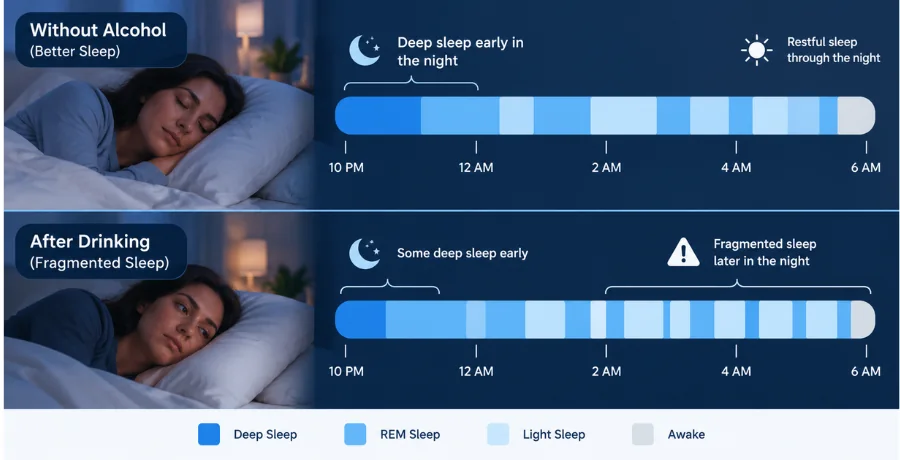
Alcohol is a sedative. It helps you drop off but changes the structure of the night. Researchers describe a typical pattern:
- Breathing gets worse. Alcohol relaxes the throat muscles and can trigger or worsen snoring and sleep apnea.
- Bathroom trips increase, because alcohol suppresses the hormone that tells the kidneys to conserve water.
- It compounds over days. Regular evening drinking can erode sleep quality even when you do not feel drunk. See REM and deep sleep problems and insomnia.
2. What is going on during hangover fatigue
A hangover is not simply dehydration. Several things stack up, which is why a glass of water alone does not fix it.
- Disrupted sleep, described above, is probably the biggest driver of tiredness.
- Acetaldehyde. The liver breaks alcohol into this toxic compound before clearing it. It contributes to nausea, flushing and malaise.
- Inflammation. Alcohol triggers inflammatory signals that make you feel unwell and sluggish.
- Fluid and mineral losses from urination and sometimes vomiting add weakness and headache.
- Blood sugar dips, stomach irritation and sometimes missed meals add to the picture.
- Anxiety rebound. As alcohol leaves, the brain's calming system is under-active for a time, which many people notice as "hangxiety". See anxiety and fatigue.
Symptoms typically peak as the blood alcohol level returns toward zero and can last up to about a day. Heavy drinking can make fatigue last longer.
3. What counts as one drink
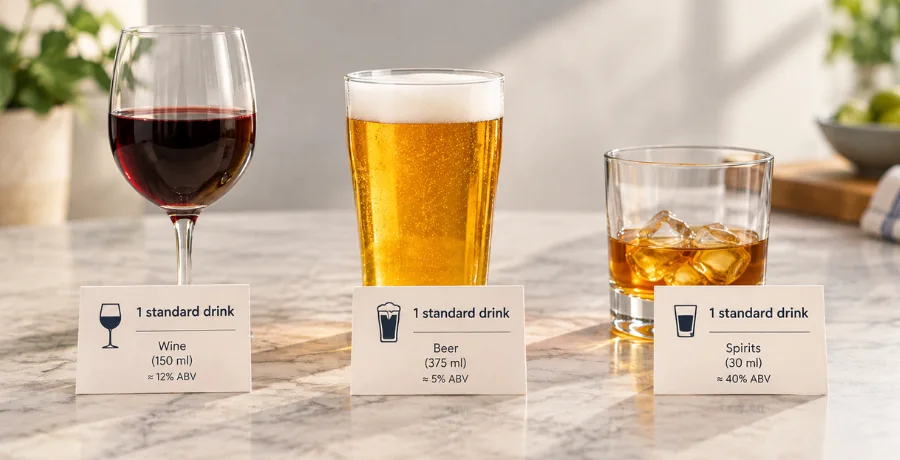
Pours are often larger than people think. In the US, one standard drink contains 14 grams of pure alcohol. In the UK, one unit is 8 grams, so definitions differ by country.
| Drink | US standard drink | Approx. UK units |
|---|---|---|
| Beer, about 5% ABV | 12 oz (355 ml) | about 1.8 per 355 ml |
| Wine, about 12% ABV | 5 oz (150 ml) | about 1.8 per 150 ml |
| Spirits, about 40% ABV | 1.5 oz (45 ml) | about 1.8 per 45 ml; a UK single (25 ml) is 1 |
| A 750 ml bottle of wine | about 5 standard drinks | about 9 units |
The US NIAAA describes low-risk drinking as no more than 4 drinks a day and 14 a week for men, and 3 a day and 7 a week for women. UK guidance advises no more than 14 units a week, spread across three or more days. Health bodies stress that no level of drinking is entirely risk-free, and some people should not drink at all, including during pregnancy.
4. When drinking causes lasting fatigue
Occasional drinking explains next-day tiredness. Regular heavy drinking can cause persistent exhaustion through several routes.
| Route | How it drains energy | Read more |
|---|---|---|
| Liver disease | Fat build-up, inflammation and eventually scarring reduce the liver's ability to regulate energy and clear toxins | Fatty liver and fatigue |
| Anemia and low B12 or folate | Alcohol impairs absorption and bone marrow function, so oxygen delivery falls | Vitamin B12 deficiency |
| Low magnesium and thiamine | Alcohol raises losses and reduces intake of key energy-related nutrients | Magnesium and fatigue |
| Depression and anxiety | Alcohol is a depressant and can worsen mood, creating a cycle of low energy and more drinking | Depression fatigue |
| Chronic poor sleep | Repeated fragmentation prevents recovery night after night | REM and deep sleep |
5. A quick, confidential self-check
The AUDIT-C screen
Three questions adapted from the widely used AUDIT-C screening tool. It is educational, not a diagnosis, and nothing you choose here is stored.
6. What actually helps, ranked by evidence
| Approach | What it involves | Evidence |
|---|---|---|
| Drink less, or not at all | The only reliable way to prevent alcohol-related fatigue | Strong |
| Stop earlier in the evening | Finish drinking at least 3 to 4 hours before bed to let levels fall | Moderate |
| Eat before and while drinking | Slows absorption and eases stomach irritation | Moderate |
| Alternate with water | Reduces total intake and fluid loss | Moderate |
| Rest and time | Sleep, light food and fluids while your body recovers | Strong |
| Electrolyte drinks, supplements, "cures" | Little proof they speed recovery beyond rehydration | Limited |
| Coffee, cold showers, "hair of the dog" | Do not clear alcohol. More drinking only delays the crash | Not helpful |
Do not take paracetamol (acetaminophen) after heavy drinking without checking safe amounts, as the combination can harm the liver. Anti-inflammatory painkillers can irritate an already sore stomach. Ask a pharmacist.
7. Cutting back safely
- Set a weekly limit and alcohol-free days. Write them down; vague intentions fail.
- Measure pours at home. Home servings are often double the standard size.
- Replace the ritual. Choose a drink you enjoy that has no alcohol, rather than going without anything.
- Track your sleep and energy over two alcohol-free weeks. Many people notice a clear improvement and see the link for themselves.
- Get support. Your clinician can discuss options without judgment.
Abrupt withdrawal after heavy, regular drinking can cause seizures and delirium tremens, which are medical emergencies. Speak with a clinician before cutting back, and seek urgent care for shaking, sweating, hallucinations or confusion.
8. Safety and when to get help
- Cannot be woken, slow or irregular breathing, blue or pale skin, repeated vomiting, seizures. These can signal alcohol poisoning. Call emergency services and do not leave the person alone.
- Yellow skin or eyes, swollen belly, dark stools or vomiting blood need urgent medical assessment.
- Tiredness persisting more than two weeks after you cut back deserves a check-up, including blood tests.
- Feeling unable to control your drinking, drinking in the morning, or thoughts of self-harm. Seek help from a clinician or a helpline.
In the US, the SAMHSA National Helpline is 1-800-662-4357 (free, confidential, 24/7). In the UK, Drinkline is 0300 123 1110. If you are elsewhere, contact your local health service.
9. Frequently asked questions
Why am I so tired after drinking alcohol?
Why do I feel tired the day after even one or two drinks?
How long does hangover fatigue last?
Does coffee cure a hangover?
Can alcohol cause chronic fatigue?
How long after quitting alcohol does energy improve?
Your alcohol and energy plan
- Know your number. Count standard drinks for a week, not guesses.
- Finish early. Stop at least 3 to 4 hours before bed and alternate with water.
- Judge by sleep and energy, not by how drunk you felt.
- Get help early if cutting back feels hard, and never stop suddenly after heavy daily drinking.

References
- National Institute on Alcohol Abuse and Alcoholism (NIAAA): alcohol and sleep; low-risk drinking guidance.
- CDC: alcohol and public health; standard drink definitions.
- NHS: alcohol units, hangovers and withdrawal guidance.
- SAMHSA: National Helpline and AUDIT-C related screening resources.
- Mayo Clinic: hangovers, alcohol and sleep, alcohol-related liver disease.