
Blog
Why Am I Always Tired? Causes of Constant Fatigue (Sleep, Stress & Hormones – 2026 Guide)


Internal Pillar Article
For deeper understanding, read:
Why Am I Always Tired? Clinical Breakdown (2026)
Related Cluster Articles (Internal SEO Structure)
- Why do I feel tired after eating
- Chronic fatigue vs burnout
- Sleep apnea symptoms guide
- Vitamin deficiency fatigue symptoms
- Thyroid fatigue explained
- Morning fatigue causes
QUICK ANSWER (FEATURED SNIPPET OPTIMIZED)
Feeling tired all the time is rarely caused by a single disease. In most cases, chronic fatigue results from multiple overlapping dysfunctions in sleep quality, metabolic regulation, hormonal balance, nervous system load, and nutrient availability.
Modern clinical research describes fatigue as a multi-system energy regulation failure rather than a standalone medical condition.
In simple terms, fatigue happens when the body cannot efficiently produce, regulate, or restore energy across multiple biological systems at the same time.
1. INTRODUCTION (CLINICAL + REAL-LIFE VIEW)
Fatigue is one of the most common symptoms reported in modern healthcare systems worldwide. Despite this, it remains one of the least understood conditions because it is not a disease by itself.
Patients often report the same experiences:
- Waking up tired even after 7–9 hours of sleep
- Losing energy during normal daily activities
- Difficulty concentrating or brain fog
- Feeling exhausted even without physical effort
The key problem is that fatigue does not always appear in blood tests or standard medical exams.
In clinical observation, many individuals with normal lab results still experience severe fatigue. This is because fatigue is not caused by one system failure, but by multiple interacting systems in the body.
These systems include:
Sleep regulation
Metabolic energy production
Hormonal balance
Nervous system stability
Nutrient and oxygen delivery
When even one of these systems is inefficient, total energy output decreases significantly.

2. WHAT FATIGUE ACTUALLY FEELS LIKE
Fatigue is not the same for everyone. It depends on which system is affected.
Morning fatigue pattern
- Waking up unrefreshed
- Feeling heavy and slow after waking
- Dependence on caffeine
Often linked to sleep quality problems or sleep apnea.
Mental fatigue pattern
- Brain fog
- Reduced focus
- Emotional exhaustion
Often linked to stress overload or nervous system fatigue.
Post-meal fatigue pattern
- Energy drops after eating
- Sleepiness after lunch or dinner
- Sugar cravings
Often linked to blood sugar instability or insulin resistance.
Constant fatigue pattern
- No energy peaks during the day
- Persistent exhaustion
- No recovery even after rest
Usually multi-system dysfunction.

3. WHY FATIGUE HAPPENS (MULTI-SYSTEM MODEL)
3.1 Sleep System Dysfunction (PRIMARY FACTOR)
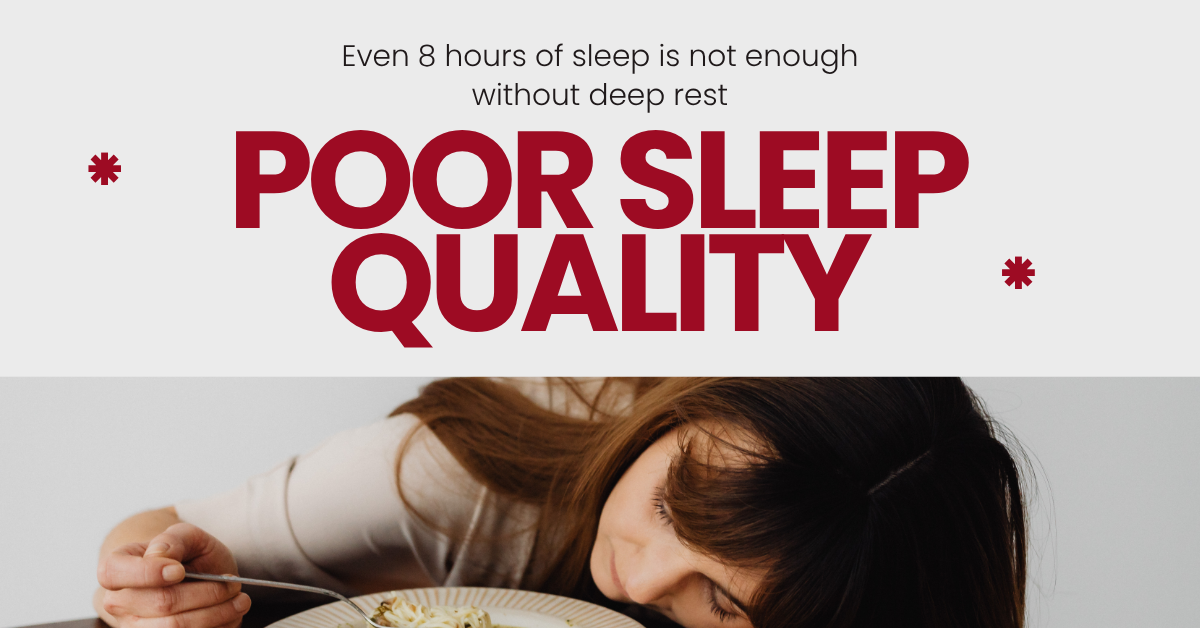
Sleep is the foundation of energy recovery. Even if sleep duration is sufficient, poor sleep quality can still cause chronic fatigue.
Sleep quality depends on:
Deep sleep cycles (N3 stage)
REM sleep restoration
Stable circadian rhythm
Common disruptors:
Irregular sleep schedule
Night screen exposure
Chronic stress
Sleep apnea
Sleep apnea reduces oxygen during sleep and prevents full recovery.
External source:
https://www.cdc.gov/sleep/about_sleep/sleep_apnea.html
3.2 Metabolic Energy Dysfunction
The body depends on stable glucose regulation for consistent energy.
When blood sugar fluctuates:
- Energy spikes and crashes occur
- Brain fog increases
- Post-meal fatigue develops
Often associated with early insulin resistance.
External source:
https://www.ncbi.nlm.nih.gov/pmc/articles/PMC6520897/
3.3 Nervous System Overload (STRESS FATIGUE)
Chronic stress keeps the nervous system in a semi-activated state.
This leads to:
- Poor recovery
- Reduced sleep depth
- Emotional exhaustion
- Mental fatigue without physical effort
External source:
https://www.health.harvard.edu/staying-healthy/understanding-the-stress-response
3.4 Nutrient and Oxygen Delivery Issues
Energy production depends heavily on nutrients:
Iron → oxygen transport
Vitamin B12 → nervous system function
Vitamin D → metabolic regulation
Even borderline deficiencies can cause fatigue without obvious disease markers.
External sources:
https://www.mayoclinic.org/diseases-conditions/iron-deficiency-anemia
https://www.nhs.uk/conditions/vitamin-b12-or-folate-deficiency/
Low ferritin is especially linked to chronic fatigue even when hemoglobin is normal.
3.5 Thyroid Dysfunction
The thyroid controls metabolic speed.
When thyroid function slows:
- Energy decreases
- Thinking becomes slow
- Weight increases
- Cold sensitivity appears
External source:
https://www.thyroid.org/hypothyroidism/
4. WHY BLOOD TESTS OFTEN LOOK NORMAL
Many people with chronic fatigue report normal blood tests.
This happens because standard tests detect disease, not functional energy problems.
Common missed issues:
Low-normal ferritin
Early metabolic dysfunction
Stress physiology imbalance
Circadian rhythm disruption
Sleep quality and nervous system regulation are not measurable in standard blood tests.
5. REAL-WORLD FATIGUE PATTERNS
Office fatigue
Long sitting, screen exposure, and mental overload reduce energy output.
Student fatigue
Irregular sleep and high cognitive load disrupt recovery systems.
Athlete fatigue
Overtraining without recovery reduces mitochondrial efficiency.
6. DIAGNOSTIC APPROACH
Basic tests
Ferritin
Vitamin B12
Vitamin D
TSH, T3, T4
Advanced tests
Fasting insulin
HbA1c
Cortisol rhythm
CRP inflammation marker
Specialized tests
Sleep study (sleep apnea)
Metabolic function assessment
7. WHEN FATIGUE IS SERIOUS
Seek medical evaluation if:
Fatigue lasts more than 3–4 weeks
Symptoms worsen over time
Chest pain or dizziness occurs
Unexplained weight loss appears
Neurological symptoms develop
8. SELF-ASSESSMENT CHECKLIST
If two or more apply:
Waking up tired
Afternoon energy crash
Brain fog
No recovery after rest
Multi-system fatigue is likely.
9. TOPICAL AUTHORITY CLUSTER (SEO STRUCTURE)
This article is part of a structured SEO cluster:
Why do I feel tired after eating
Chronic fatigue vs burnout
Sleep apnea symptoms guide
Vitamin deficiency fatigue symptoms
Thyroid fatigue explained
Morning fatigue causes
Internal linking between these pages strengthens topical authority and improves ranking performance.

10. FINAL SUMMARY
Chronic fatigue is not a single disease. It is a multi-system energy regulation failure involving sleep quality, metabolic stability, hormonal balance, nervous system load, and nutrient availability.
The correct approach is not guessing a single cause, but identifying which system is most affected and correcting it step by step.
❓ FAQ SECTION (SEO BOOST)
Why am I always tired even after sleeping?
Most commonly due to poor sleep quality, stress, sleep apnea, or nutrient deficiencies.
Why do I feel tired after eating?
Usually caused by blood sugar fluctuations or insulin response issues.
Can stress cause constant fatigue?
Yes. Chronic stress keeps the nervous system in a constant low-level activation state.
Why do I feel tired but tests are normal?
Because standard blood tests do not measure sleep quality, stress load, or circadian rhythm.
What deficiencies cause fatigue?
Iron, vitamin B12, and vitamin D are the most common.

