
Blog
Your Fatigue Isn’t Random. Your Nervous System Just Hasn’t Gotten the All-Clear.


Your Fatigue Isn't Random. Your Nervous System Just Hasn't Gotten the All-Clear.
Not every case of stress-related exhaustion is burnout, and not every one is a cortisol problem. Sometimes it's simpler and broader than either: a nervous system that's been braced for impact so long it's forgotten how to stand down.
How to read this meter
You'll see a smaller version of this next to specific claims further down — it shows how much research backs that particular point, not the article as a whole. A lower reading isn't a warning, just a nudge to hold that specific claim a little more loosely.

Somewhere between "I'm just tired" and a diagnosable condition, there's a state a lot of genuinely exhausted people fall into without a name for it: not clinically depressed, not diagnosed with an anxiety disorder, not burned out by a job in the clinical sense of that word — just permanently, quietly braced. If that's you, this article is about naming what that actually is, what's happening in your body while it lasts, and why it's a different, broader thing than any single hormone test or workplace label can fully capture.
1. What "Stress Overload" Actually Means
Stress itself is not the problem. A short burst of it is exactly what gets you through a near-miss on the highway, a tight deadline, or a hard conversation, and afterward your body is built to stand down and return to its resting state. The National Institute of Mental Health describes this kind of short-term stress as genuinely useful — it sharpens focus and readies the body to meet a real, time-limited demand.
"Stress overload," as used in this article, describes something else: a stress response that keeps getting re-triggered before it ever fully resets, until the body starts treating an ongoing, ordinary life — bills, a difficult relationship, a caregiving role, a health scare, a never-ending inbox — the same way it would treat a genuine emergency, continuously. This isn't a single diagnosis, and it isn't the same question as "is my cortisol too high." It's a broader pattern that researchers often describe using the concept of allostatic loadThe cumulative wear on the body's stress-response systems from being activated too often or for too long without fully resetting. — the accumulated cost of a stress system that rarely gets to power down.
2. The Alarm System That Won't Stand Down
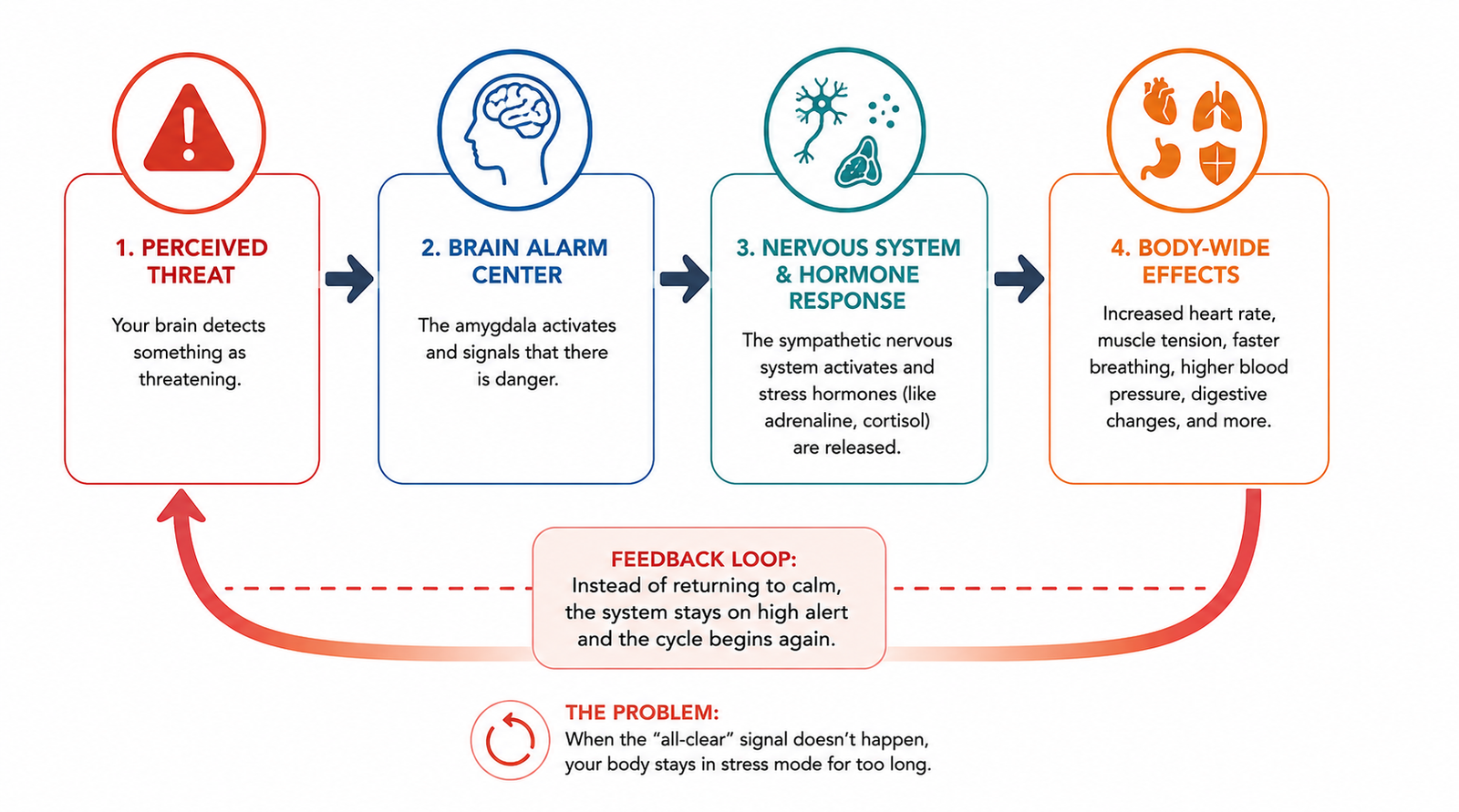
When your brain registers something as a threat, real or not, it sets off a fast chain reaction. According to the Cleveland Clinic, this begins with a communication loop between the brain and adrenal glands that triggers the release of stress hormones, while a closely linked system fires off adrenaline to produce the classic "fight-or-flight" response. Mayo Clinic notes that this response raises heart rate and blood pressure, boosts glucose availability for quick energy, and temporarily dials back functions the body considers non-essential in the moment, including digestion and immune activity.
In a genuinely short-term stressor, that response is self-limiting: once the threat passes, hormone and heart-rate levels are meant to drift back down to baseline. Stress overload is what happens when the "threat passed" signal never quite arrives — when a fast-paced job, an unresolved conflict, ongoing financial strain, or a chronic health condition keeps the alarm circuit lightly activated around the clock, so the body never gets the chance to fully spend down what it geared up for.
It isn't the stress response itself that wears the body down. It's a stress response that never gets the signal to stand all the way down. — Clinical Advisory Panel
3. Why This Isn't the Same as a "Cortisol Problem"
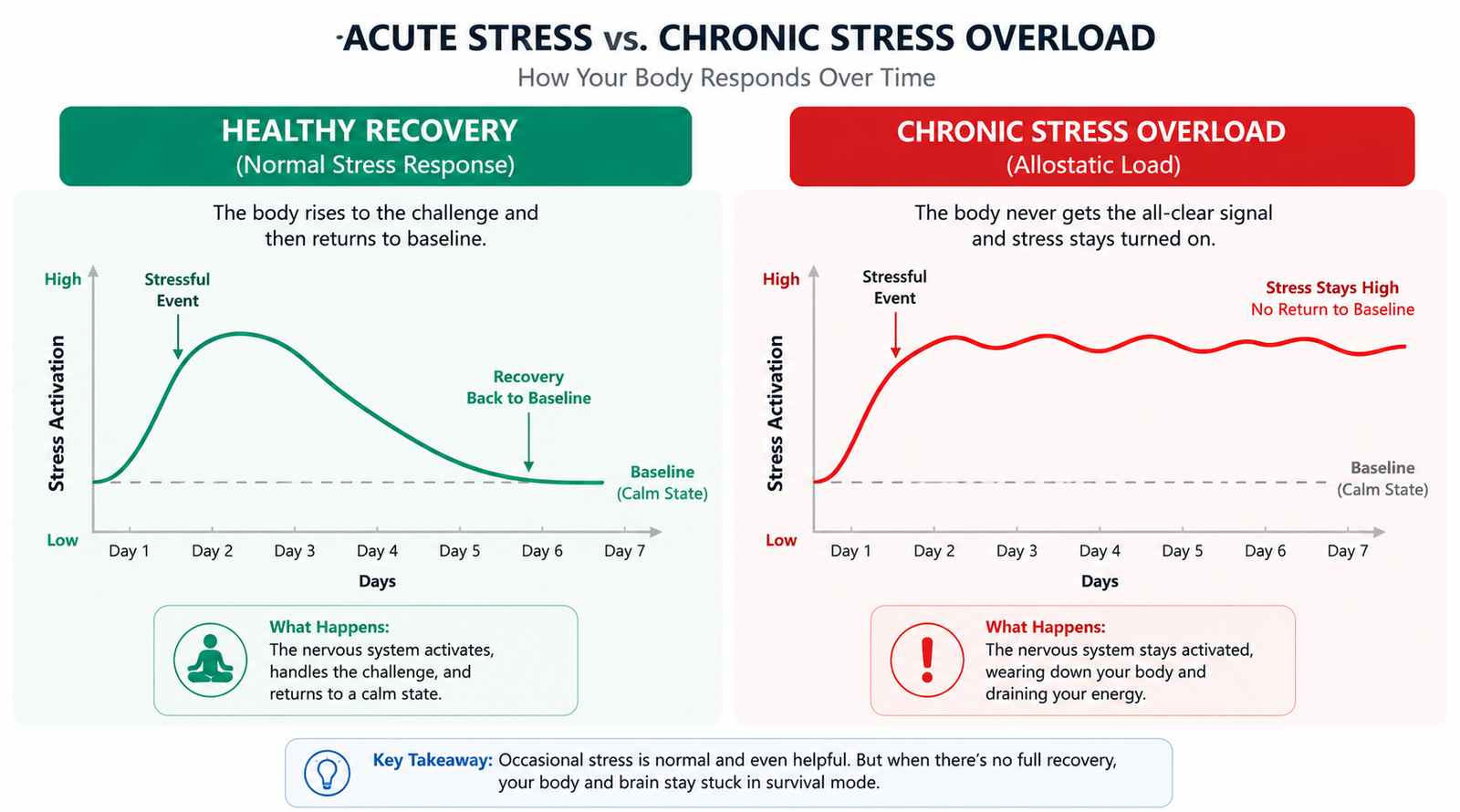
It's tempting to collapse all of this into "my cortisol is too high," and cortisol genuinely is one of the major hormones involved — we cover its specific rhythm, testing, and symptom picture in detail in our companion piece on cortisol and fatigue. But stress overload, as a pattern, is broader than any single hormone's level on any single day. It involves the sympathetic nervous system's moment-to-moment activation, the slower hormonal axis cortisol belongs to, and knock-on effects on sleep, digestion, and immune signaling that a cortisol blood test alone was never designed to capture.
That distinction matters practically: someone can have a cortisol test that comes back within a normal range and still be living in a genuinely overloaded state, because a single snapshot measurement doesn't capture how often the alarm circuit gets re-triggered across a typical week, or how little true recovery time it's actually getting between triggers.
4. Why This Isn't the Same as Burnout
It's worth being just as clear about the other direction. Our dedicated guide to burnout and fatigue covers a specific, named occupational exhaustion pattern, generally built around three recognizable pieces: deep exhaustion, growing cynicism or detachment, and a sense of reduced effectiveness, all tied to a work role. Stress overload doesn't require a job at all. A full-time caregiver, a new parent running on interrupted sleep, someone navigating a chronic illness diagnosis, or a person in a high-conflict relationship can all experience the exact same nervous-system pattern described here without ever setting foot in a workplace.
The two can absolutely overlap — a demanding job is a very common source of the ongoing triggering this article describes — but treating every case of stress-related exhaustion as occupational burnout misses the people whose "job" is simply an unrelenting life circumstance.
| Term | What it specifically refers to | Where to read more |
|---|---|---|
| Stress overload (this article) | A nervous system stuck in ongoing partial activation, from any source, without full reset between triggers | You're reading it |
| Cortisol issues | One specific hormone's daily rhythm and level, measurable on a single blood or saliva test | Cortisol & Fatigue |
| Burnout | A named occupational exhaustion pattern tied specifically to a work role | Burnout and Fatigue |
| Anxiety disorder | A diagnosable mental health condition with its own specific criteria and treatment path | Anxiety and Fatigue |
| "Adrenal fatigue" | A contested, non-standard label describing supposed adrenal exhaustion — a separate science debate on its own | Adrenal Fatigue: Myth or Real |
That an unresolved, repeatedly triggered stress response produces measurable, cumulative wear on the body is one of the more consistently replicated ideas in stress physiology, generally discussed under the framework of allostatic load.
5. The Physical Signs, Beyond Just Feeling Tired
Because the stress-response system reaches into so many other systems at once, ongoing overload rarely shows up as fatigue alone. The American Psychological Association notes that unmanaged stress can affect the body across multiple systems at once, including cardiovascular, digestive, and immune function, alongside its more commonly discussed effects on mood and sleep.
| System affected | What people commonly report | Why it happens |
|---|---|---|
| Sleep | Trouble falling asleep, waking at 3-4am with a racing mind | An activated nervous system resists the drop in alertness sleep requires |
| Digestion | Stomach tightness, appetite swings, a "nervous stomach" | Digestive activity is deliberately dialed back during a threat response |
| Muscles | Jaw clenching, shoulder and neck tension, tension headaches | Muscles stay primed for action that never actually gets used up |
| Mood and focus | Irritability, a short fuse, difficulty concentrating on simple tasks | Sustained activation affects the same brain regions involved in mood regulation |
| Immune function | Getting sick more often, or healing more slowly than expected | Ongoing activation can interfere with normal immune regulation over time |
6. The Honest Debate: Is This Overdiagnosed?
This is a genuinely contested area, and it deserves a balanced account rather than a confident verdict either way. "Stress" has become such a common, catch-all explanation for tiredness that some clinicians are understandably cautious about it, worried that a vague stress label gets reached for too quickly, before other explanations — a thyroid issue, an iron deficiency, a sleep disorder — have been properly ruled out.
The physiology is real and well documented
Researchers who study allostatic load argue that treating chronic, unresolved stress activation as a legitimate contributor to fatigue isn't vague at all — it's a specific, measurable physiological pattern with real downstream effects across multiple body systems.
"Stress" shouldn't be the default explanation
Other clinicians point out that fatigue has many possible causes, and reaching for "you're just stressed" too early can delay a proper workup for a condition like thyroid dysfunction, anemia, or a sleep disorder that actually needs its own specific treatment.
Both positions are reasonable, and the practical takeaway sits between them: stress overload is a real, physiologically grounded pattern worth naming and addressing, but it's most useful as one possibility to weigh alongside a proper evaluation for other fatigue-related causes, not as an automatic first and only answer.
7. Real-World Scenarios: Where Do You Fit?
"I don't have a demanding job, but I'm exhausted all the time from caregiving for a parent."
This is exactly the kind of case the burnout label misses, since burnout is specifically tied to a work role. The nervous-system mechanism described in Section 2 doesn't care whether the ongoing demand is a job or a caregiving role.
"My cortisol test came back normal, but I still feel wired and tired at the same time."
A single normal cortisol reading doesn't rule out an overloaded pattern, as discussed in Section 3 — it only reflects one hormone at one moment, not how often your alarm system is being re-triggered across a typical week.
"I wake up at 3am with my mind racing, most nights, for months now."
This specific pattern is one of the more commonly reported signs of an overactive nervous system that hasn't fully stood down, described further in Section 5.
"I've been told I'm 'just stressed' for years, but nobody's actually tested anything."
This is where the caution in Section 6 applies — it's reasonable to ask for a basic fatigue workup (thyroid, iron, a vitamin panel) before settling on stress overload as the full explanation.
8. The Loop That Makes It Worse: Sleep, Stimulants, and Alcohol
Stress overload rarely stays still — it tends to feed a handful of compounding habits that then make the underlying pattern harder to shake. Understanding this loop is useful because breaking any single link in it tends to ease the others too.
- Poor sleep from a wired nervous system reduces the body's overnight opportunity to reset, which in turn makes the nervous system more reactive to ordinary triggers the next day.
- Increased caffeine or other stimulant use to push through daytime exhaustion adds a second source of nervous-system activation on top of the existing one, rather than resolving it.
- Alcohol used to "wind down" in the evening can fragment sleep quality later in the night even when it initially feels relaxing, which undercuts the very recovery it was meant to provide.
- Skipped meals or erratic eating under time pressure can itself trigger a mild stress response through blood sugar swings, layering another minor trigger onto an already-activated system.
Exactly how much each individual habit in this loop contributes, compared to the underlying stressor itself, varies a good deal person to person — treat this as a set of levers worth checking, not a precise formula.
9. Who's Most Likely to Experience This
People Juggling Multiple Ongoing Roles at Once
Parents balancing work and caregiving, sandwich-generation caregivers managing both children and aging parents, and people supporting a family member through illness commonly describe this exact "always on" feeling.
People in Prolonged Uncertainty
An unresolved medical diagnosis, a pending legal matter, or an unstable financial situation can keep the nervous system activated even without a single dramatic event, simply because there's no clear resolution point in sight.
People in an Ongoing High-Conflict Relationship or Living Situation
Repeated, low-grade relational conflict is a well-recognized trigger for the same sustained activation pattern described throughout this article.
People With a Demanding Job Who Also Feel Fine About the Job Itself
This group is worth naming specifically because they often don't recognize themselves in burnout descriptions — they may genuinely like their work and not feel cynical about it, yet still carry the same overloaded nervous-system pattern from its sheer pace or unpredictability.
10. How This Differs From Other Fatigue-Relevant Causes
Because stress-related exhaustion shares so much surface overlap with other causes of fatigue, it's worth being clear about where this pattern's job starts and stops. Overlapping symptoms don't mean overlapping mechanisms — someone can have a genuinely overloaded nervous system and a separate, unrelated thyroid or iron issue at the same time, which is exactly why a full evaluation, covered in Section 12, matters more than settling on one explanation.
| Cause | What it's actually checking or describing | Where to read more |
|---|---|---|
| Stress overload (this article) | A nervous system stuck in ongoing partial activation, from any source | You're reading it |
| Insomnia | A specific sleep disorder involving persistent difficulty falling or staying asleep | Insomnia and Fatigue |
| Thyroid dysfunction | An underactive or overactive thyroid gland, tested via TSH | TSH Test Explained |
| Chronic inflammation | A general inflammation marker unrelated to the stress-response system itself | CRP and Inflammation Fatigue |
| Depression | A diagnosable mood disorder with its own distinct symptom criteria | Depression Fatigue |
11. Home Tracking: Building Your Own Picture
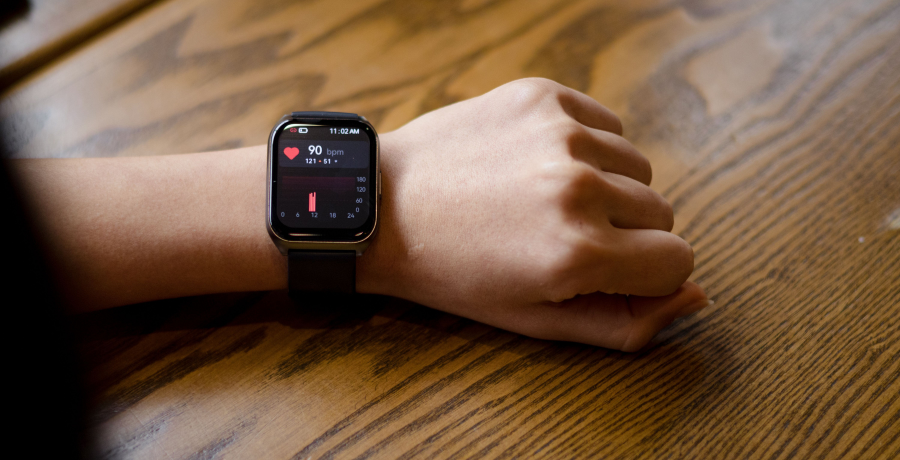
Before deciding how to approach this, a bit of simple tracking can help you and your clinician see the actual pattern rather than a general impression of "I'm stressed."
Note your 3am wake-ups, specifically
A racing mind at a consistent overnight hour is one of the more recognizable markers of an overactive nervous system, and it's worth tracking as its own data point rather than folding it into general "bad sleep."
Track caffeine and alcohol timing, not just amount
When you consume each, relative to your bedtime and your energy dips, tells a clinician more than a total daily count does.
Log physical tension spots
Jaw, shoulders, or a tight chest at specific times of day can help identify which parts of your routine are acting as the strongest triggers.
Consider a heart-rate-variability reading as a rough signal
Many consumer wearables now estimate this, and while it isn't a diagnostic tool, a consistently low reading alongside your other notes can support a conversation with your clinician, discussed further in Section 12.
12. What a Proper Evaluation Looks Like
Because stress-related exhaustion overlaps so heavily with other treatable causes of fatigue, a thorough evaluation usually looks beyond the stress label itself before settling there.
| Assessment | What it evaluates | Why it's used |
|---|---|---|
| History of ongoing life demands | Work, caregiving, relationship, and financial pressures over recent months | Frames whether an overload pattern is plausible before assuming it |
| Sleep pattern review | Time to fall asleep, overnight wake-ups, and morning restfulness | Sleep disruption is often the clearest window into an overactive nervous system |
| Basic fatigue-relevant labs | Thyroid, iron, and vitamin status, as covered in our blood tests for fatigue guide | Rules out other well-known, treatable causes before settling on a stress explanation |
| Mood and anxiety screening | Whether symptoms meet criteria for a diagnosable condition | Distinguishes ongoing stress overload from anxiety or depression, covered in Section 10 |
If your fatigue has come with racing overnight thoughts, a short fuse, and physical tension, but basic labs come back clear, it's reasonable to specifically raise sustained stress activation as a possibility with your clinician.
13. What Actually Helps It Stand Down

The genuinely encouraging part of this whole picture is that the nervous system is built to recover, given the right signal. What helps tends to work by directly signaling "the threat has passed" to the body, rather than by trying to think your way out of the state.
Slow, extended-exhale breathing
Making the exhale noticeably longer than the inhale is one of the more consistently cited ways to directly cue the body's calming response, and it can be done anywhere, in a couple of minutes.
Regular physical movement
NIMH specifically points to regular exercise, even a daily walk, as a practical way to help the body process and reduce the physical buildup of stress.
Protecting a consistent wind-down window
A predictable buffer before bed, free of screens and unresolved tasks, gives the nervous system a clearer signal that the day's demands are actually done.
Staying connected to other people
Both the APA and NIMH note that social support is one of the more reliably protective factors against the health effects of ongoing stress, and isolation tends to make the pattern worse.
None of this requires eliminating every stressor in your life, which usually isn't realistic anyway. It requires giving the nervous system enough genuine, repeated "all clear" signals that it can start trusting them again.
14. The 2026/2027 Edge: Tracking This at Home
Consumer heart-rate-variability tracking, once mostly confined to athletes, has continued moving into mainstream fitness wearables and smartwatches, giving everyday users an accessible, if imperfect, daily signal of how activated their nervous system has been overnight. A consistently low or declining trend line, tracked over weeks rather than any single night, has become a increasingly common early prompt for people to bring the topic up with a clinician before symptoms become severe.
There's also a growing number of app-based guided breathing and biofeedback tools designed specifically around this kind of nervous-system regulation, often pairing a wearable's real-time heart-rate data with a paced breathing exercise. These tools are a reasonable, low-cost starting point for the kind of daily practice described in Section 13, though none of them replace an actual evaluation when symptoms are significant, persistent, or paired with the red flags in Section 15.
15. Red Flags: When This Needs Prompt Attention
Most stress-related exhaustion is a gradual, manageable pattern, but certain signs call for faster evaluation:
- Chest pain, an irregular heartbeat, or shortness of breath, which always warrant urgent medical evaluation regardless of suspected cause.
- Symptoms that meet the criteria for anxiety or depression rather than general stress, covered in our dedicated guides to those conditions.
- Turning to alcohol, other substances, or significantly disordered eating patterns as your main way of coping.
- A persistent sense of hopelessness, or any thoughts of self-harm, which call for immediate support from a mental health professional or crisis line.
16. Decision Guide — Your Situation, Your Next Step
Pulling everything in this guide together, here's a quick-reference table matching common situations to the specific next step worth taking.
| Your situation | Most likely explanation | First action this week |
|---|---|---|
| Exhausted from an ongoing life role, not a job | Stress overload outside the burnout framework (Section 4) | Name it explicitly to your clinician rather than assuming "burnout" is the only label available. |
| Normal cortisol test, still feel wired and tired | A broader activation pattern a single hormone snapshot can't capture (Section 3) | Track sleep and overnight wake-ups for two weeks and bring that log to your next visit. |
| Racing mind most nights around the same hour | An overactive nervous system not fully standing down (Section 5) | Try a consistent extended-exhale breathing practice before bed for two weeks. |
| Told "you're just stressed" without any testing | Possible premature stress label (Section 6) | Ask specifically for a basic thyroid, iron, and vitamin panel first. |
| Coping mainly through alcohol or stimulants | A compounding loop rather than resolution (Section 8) | Raise this pattern directly with a clinician rather than managing it alone. |
17. Frequently Asked Questions
Is "stress overload" an official medical diagnosis?
How is this different from just being anxious?
Can I have this even if I actually like my job?
Will a blood test confirm this for me?
How long does it take to feel a difference once I start addressing it?
Name the pattern precisely
- This is broader than a single hormone — a normal cortisol test doesn't rule out an ongoing overload pattern.
- It doesn't require a job — caregiving, ongoing uncertainty, and relationship strain can all drive the exact same nervous-system pattern burnout only partly describes.
- Watch the compounding loop — poor sleep, stimulants, and alcohol tend to feed this pattern rather than resolve it.
- Rule out other causes first — a basic thyroid, iron, and vitamin check belongs alongside any stress-related explanation, not instead of it.
- Recovery works through signals, not willpower — slow breathing, movement, consistent wind-down time, and staying connected to others all help the body register that the threat has actually passed.
- Know the red flags — chest symptoms, substance reliance, or hopelessness call for prompt professional support, not a longer wait-and-see period.
References
- National Institute of Mental Health — 5 Things You Should Know About Stress. nimh.nih.gov — Stress
- American Psychological Association — Stress Effects on the Body. apa.org — Stress and the Body
- Mayo Clinic — Chronic Stress Puts Your Health at Risk. mayoclinic.org — Chronic Stress
- Cleveland Clinic — HPA Axis: The Stress Response System. clevelandclinic.org — HPA Axis